


Custom AI Solutions
AI systems that grow, automate, and optimize your business.
Not a chatbot bolted onto your website. A system built around your actual workflow, your actual customers, and your actual bottleneck.
Most "AI solutions" are generic tools with your logo on them. We build custom systems that solve one specific, real problem in your business. We've done it long enough to know the difference between an AI feature that looks impressive in a demo and one a team actually uses every day.

Why most AI projects never make it to production...
Most AI initiatives fail on process fit and adoption, not on model capability. Industry research puts the share of AI agent projects that never reach production above 80%, and Gartner has forecast that more than 40% of agentic AI projects will be cancelled by 2027 — cancelled for escalating costs, unclear business value, or risk controls that were never scoped up front.
At the same time, adoption is moving fast: roughly 77% of U.S. small and midsize businesses now use AI regularly, up from 48% in mid-2024. That gap — fast adoption, weak returns — is the real story. Buying a subscription to a generic AI tool isn't the same as commissioning a system built around your actual bottleneck, and the businesses stuck in that 80% aren't failing because the technology doesn't work. They're failing because nobody scoped the one real problem worth solving, and nobody planned for the system to actually get used.
That's the gap our process is built to close — start with the one or two places AI creates real leverage, build around your actual workflow, and stay involved after launch so the system doesn't join the pile of pilots that quietly died after the demo.
What this looks like in practice...
- ✓Process audit — we find the one or two places in your business where AI can create real leverage, not the ten places where it would just be interesting.
- ✓Custom build — a system designed around your actual workflow and data, not a repackaged off-the-shelf tool.
- ✓Integration and adoption — the system has to fit into how your team already works, or it won't get used. We build for adoption, not just for launch.
- ✓Ongoing optimization — AI systems drift and improve over time; we stay involved rather than handing off and disappearing.
Proof: a custom AI estimating engine
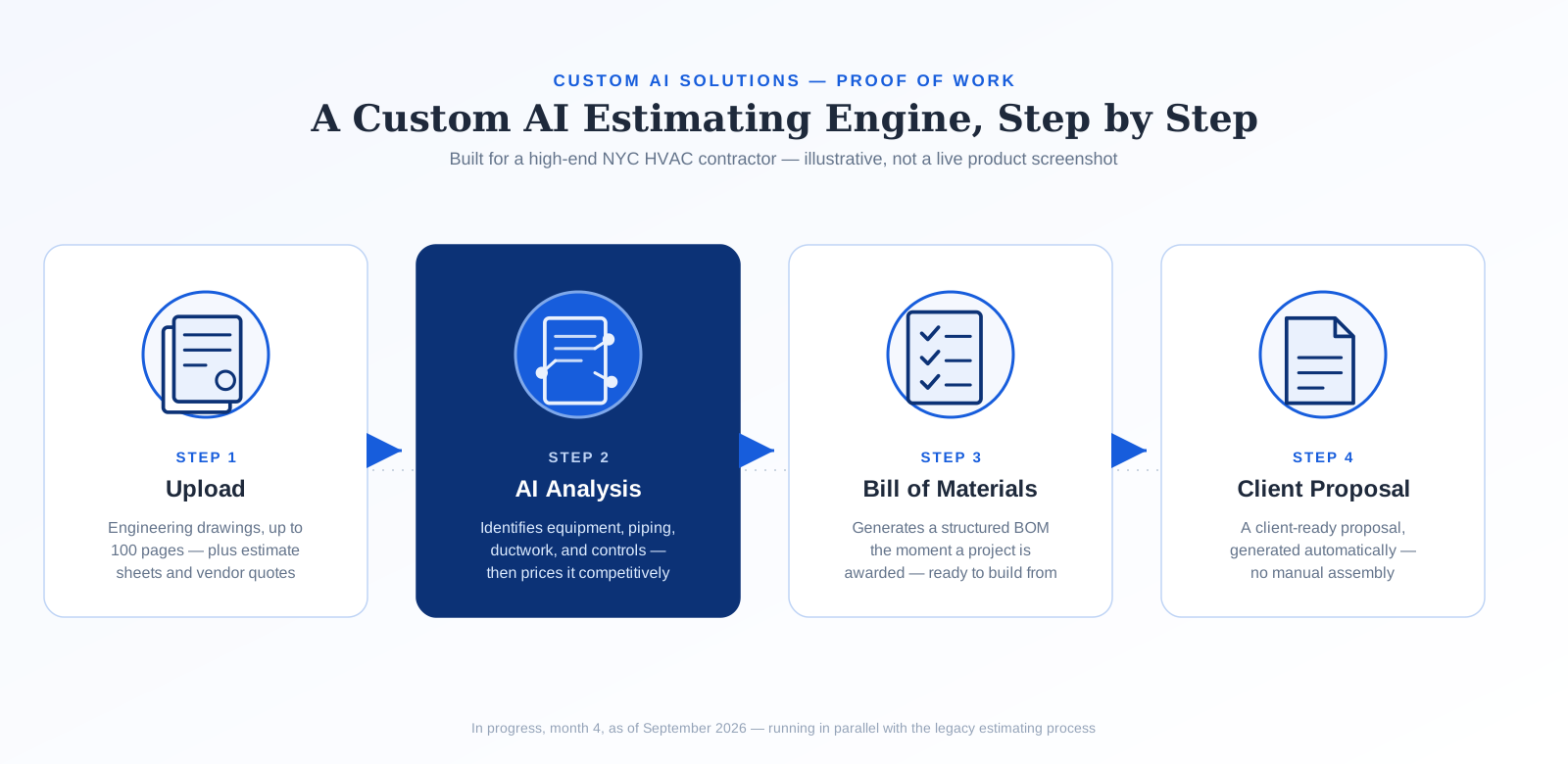
A high-end NYC HVAC contractor's entire revenue engine ran through a manual, expert-driven estimating process — one senior executive, nearing retirement, whose judgment the business depended on. Previous attempts to modernize it had failed against the complexity, precision, and financial stakes involved. We were engaged to design and build a custom AI solution that reads complex engineering drawings (some up to 100 pages), competitively prices out vendor equipment and labor, tracks scope changes across engineers and contractors, generates client-ready proposals, and produces a bill of materials once a project is awarded. The client team is genuinely energized by the tool, which is now running in parallel with the legacy process for direct comparison.
Questions we hear...
What's the difference between a chatbot and a custom AI system?
A chatbot is a generic tool with your logo on it, answering the same way it would for any business. A custom AI system is built around one specific, real bottleneck in your business — your actual workflow, your actual data, your actual edge cases — and designed from day one to be adopted by the team that has to use it, not just demoed once.
How long does it take to build a custom AI system?
It depends on the scope of the bottleneck. The process starts with a process audit, then a custom build, integration and adoption work, and ongoing optimization. Simple workflow automations can move in weeks; systems handling complex, high-stakes processes — like reading hundreds of pages of engineering drawings — take longer to get right, and shouldn't be rushed.
Why do most AI agent projects fail?
Mostly process fit and adoption, not model capability — see the numbers above. The businesses that succeed treat AI as a system that has to fit how their team actually works, not a tool bolted on top of it.
Is this different from hiring a developer to build with an AI API?
Yes. A one-off build gets you a working system on launch day. We stay involved after launch because AI systems drift and improve over time — the model changes, your business changes, and the system needs ongoing optimization to keep matching your actual workflow.
Have a workflow AI could actually fix?
Let's talk through the specific bottleneck — no generic pitch, just a straight conversation.
BOOK A 30-MINUTE CALL→